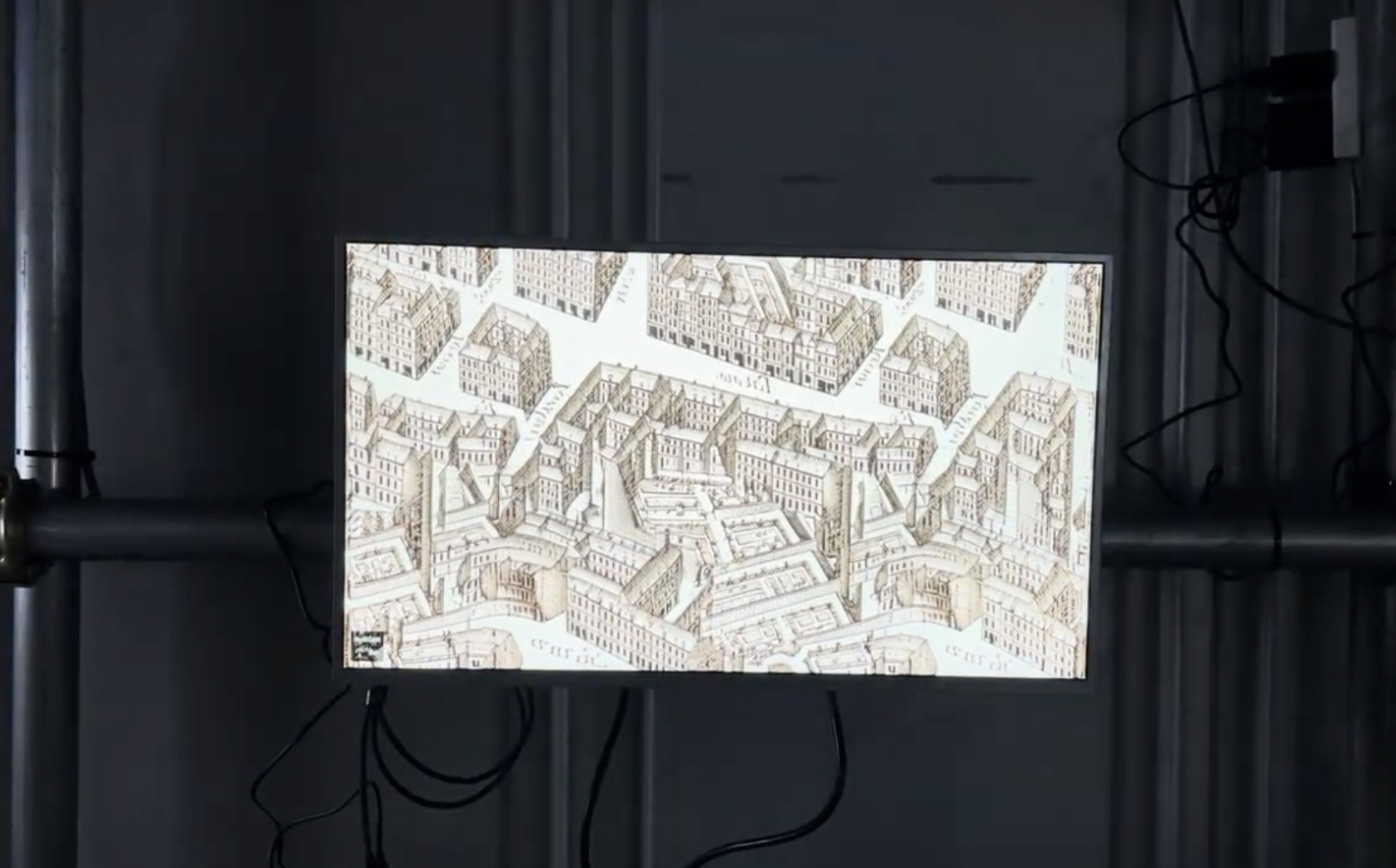
TurgotGAN in the BYOD² — Bring Your Own Data exhibition at Dig Shibuya 2025, Tokyo
NolliGAN
The Nolli map is one of the most important tools in architecture and urban design. This complex figure-ground diagram was the first to introduce the thought of public and private space in surveying and mapping; a technique used widely in architecture and urban planning since. Giambattista Nolli was commissioned by Pope Benedict XIV in 1736 to draw an accurate map of Rome.
Nolli's uniqueness both aesthetically and as a design and mapping tool is its representation of space. In the Nolli map exists space where people can go, and space where they cannot. The depiction of urban fabric consists of building mass and space that includes courtyards and the interior of churches. Public space in the Nolli map is one continuous entity weaving together history, urban planning and society.
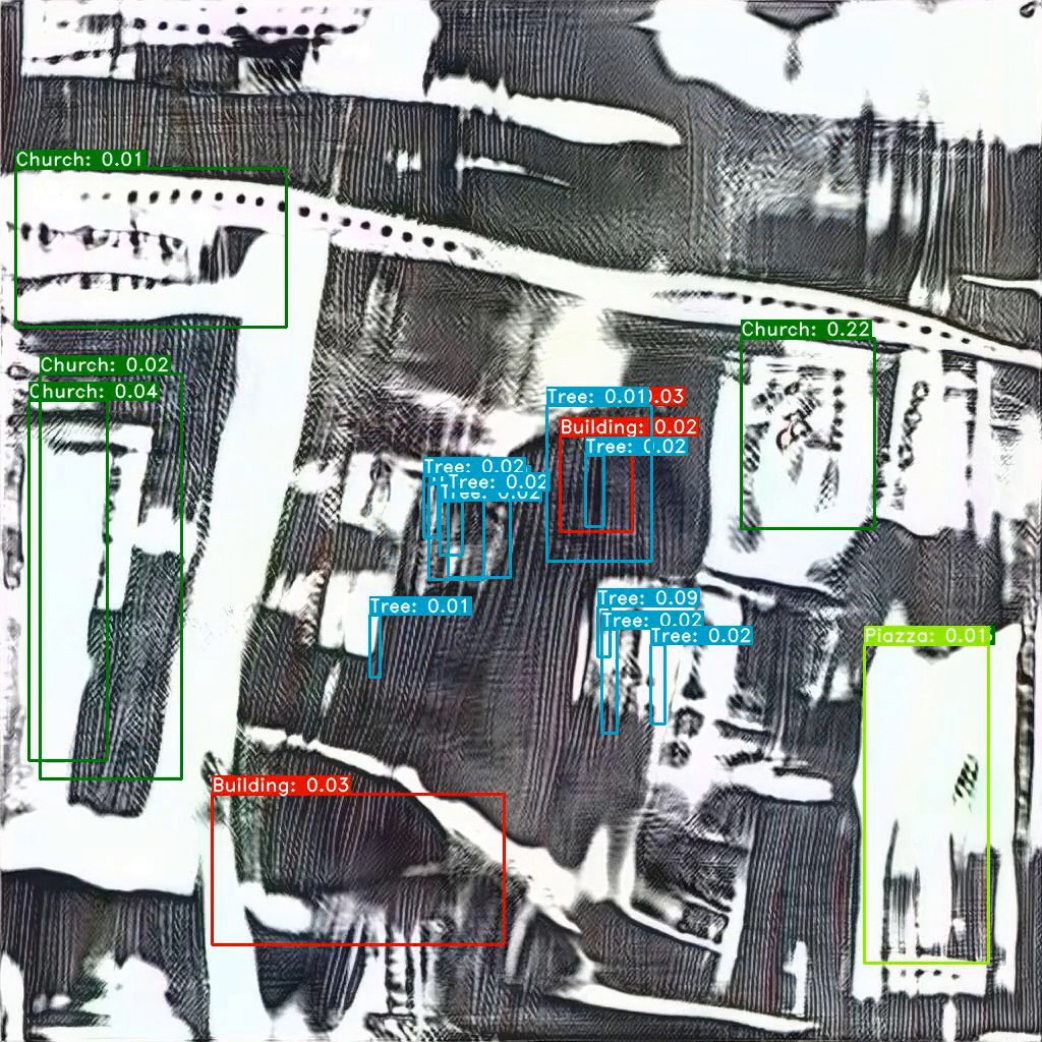
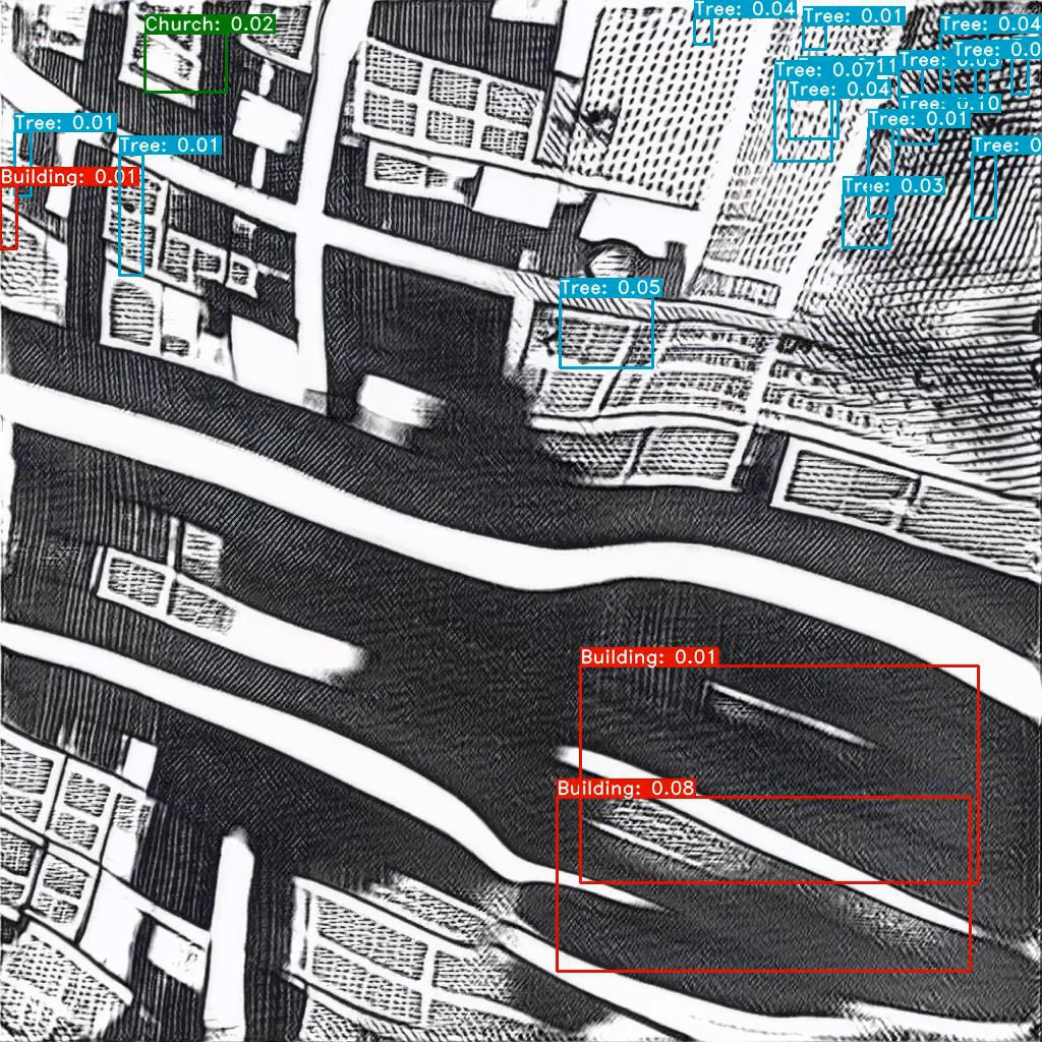
At the center of this work lies a generative model hallucinating 18th century Rome. This model was trained on a curated dataset built from a high resolution scan of the original 12 plates of the Nolli map. By manipulating inference and interpolation techniques of the generative models, varied hallucinations of urban fabric can be created. These hallucinations are then analyzed by an object detection machine learning model. This object detection model, often used for facial recognition and surveillance, is now used to decipher hallucinations and interpret the new generative 18th century Rome.
This is a StyleGAN2 (pytorch implementation) trained on a curated dataset built from high resolution scans of the original 12 plates of the Giambattista Nolli map of 18th century Rome. A YOLOv4 model was trained on the same dataset and manually annotated to recognize the main elements of 18th century Rome: the church, the piazza, and the building and the tree. An inference animation of latent space exploration was made with the StyleGAN model and then directly fed into the YOLO model, resulting in a self deciphering generative model.